
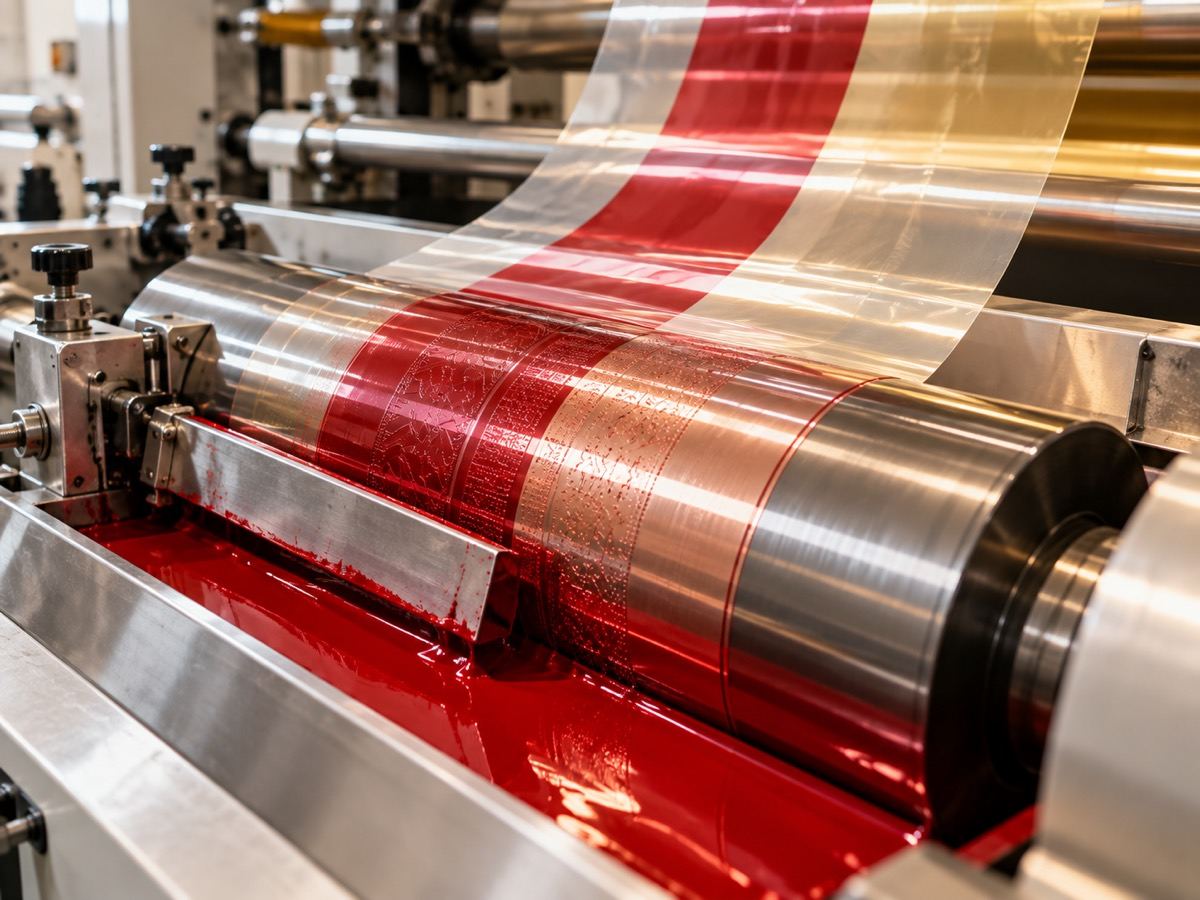
9 colour rotogravure printing machine
The main press. It prints your design onto the film, with web video and automatic register control to hold the print in position.
- 9 colours
- 1,200 mm
- 300 m/min
- 5-drive system


Bring your finished design. Our in-house artwork desk prepares it for the press, so that what you approved on screen is what comes off the cylinders.
Every machine in the 27,000 sq ft plant does something to a long reel of thin film. The film goes in plain and comes out printed, thicker, narrower, or folded into a bag. Here are the four steps, and the machines that run each one.
01PRINT
Your artwork is engraved into metal cylinders. Each cylinder turns through one ink and presses it onto the film, one colour at a time, up to nine colours. The method is called rotogravure.
Engraving the cylinders is the costly part of a first order, which is why it carries a minimum quantity. When a variant shares the layout, we change a single cylinder or a single colour instead of the whole set, so a run of 5,000 pouches stays affordable.
Machinery
The main press. It prints your design onto the film, with web video and automatic register control to hold the print in position.

A second, simpler press for polyethylene and polypropylene bags. It prints the front and the back in one pass.

The quality check. It runs the printed roll past an inspection system and stops by itself when it finds a misprint.
02BOND
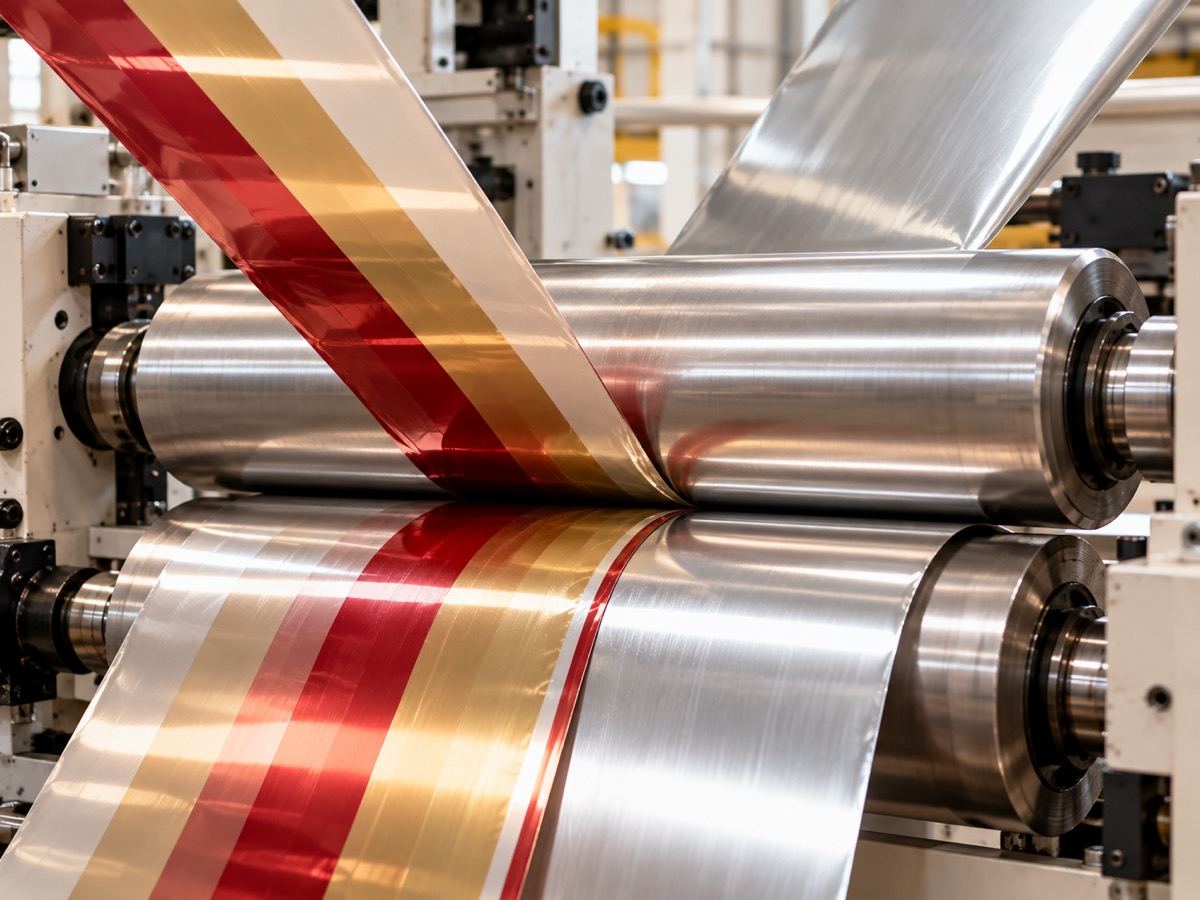
Two or three different films are bonded into one sheet. A typical build is PET, aluminium foil and polyethylene: the outside carries the print, the middle blocks light and air, and the inside melts to form the seal.
The choice of layers decides how long your product keeps. Solventless lamination leaves no odour, which is what food and pharmaceutical packs need.
Machinery

Bonds layers of film together. "Combi" means it runs both adhesive types, including the odourless solventless one.
03CUT
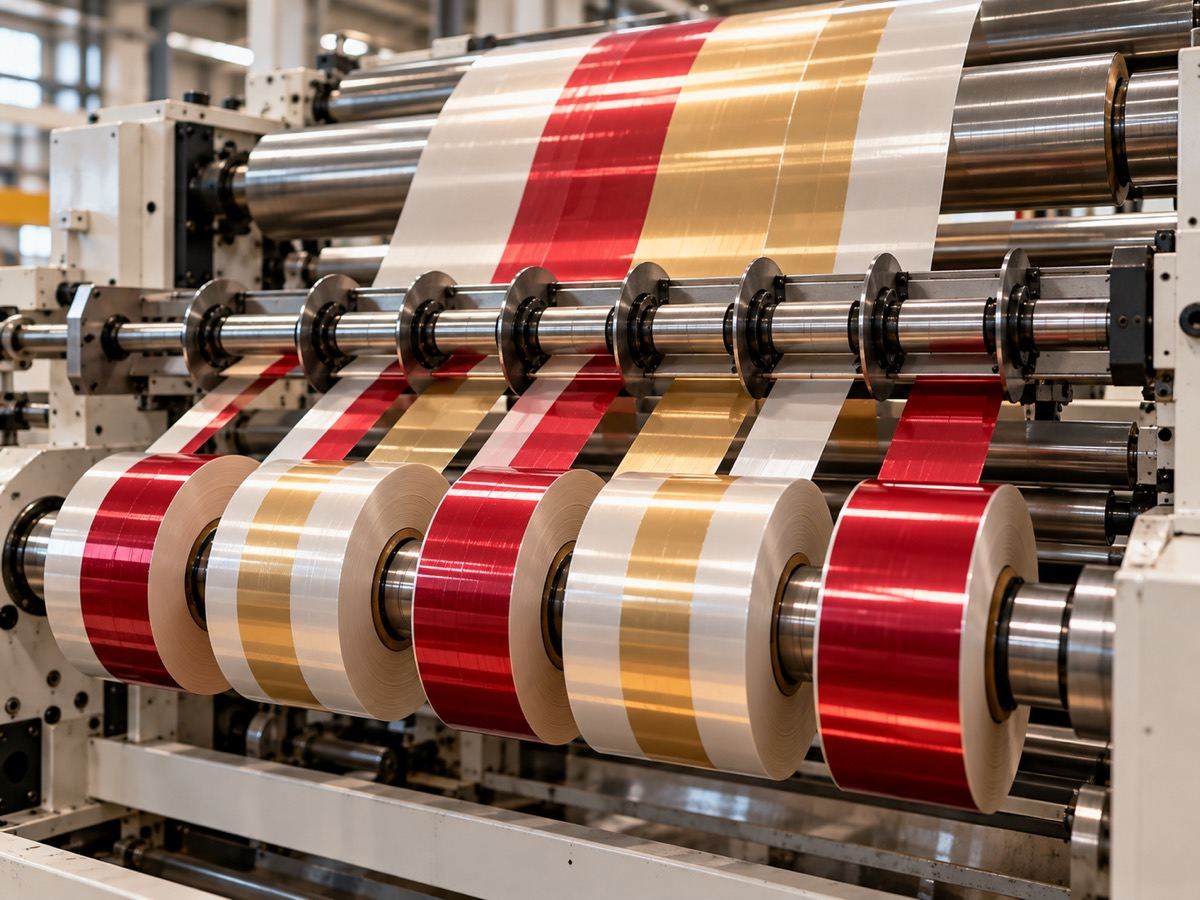
The wide printed roll is cut lengthways into narrower reels, each one sized to the machine that will run it next.
If you form and fill on your own line, this is where your order is finished. You receive reels, not pouches.
Machinery

Cuts a wide roll into narrower rolls. Drum and cantilever slitting handle every film and laminate we run.
04FORM
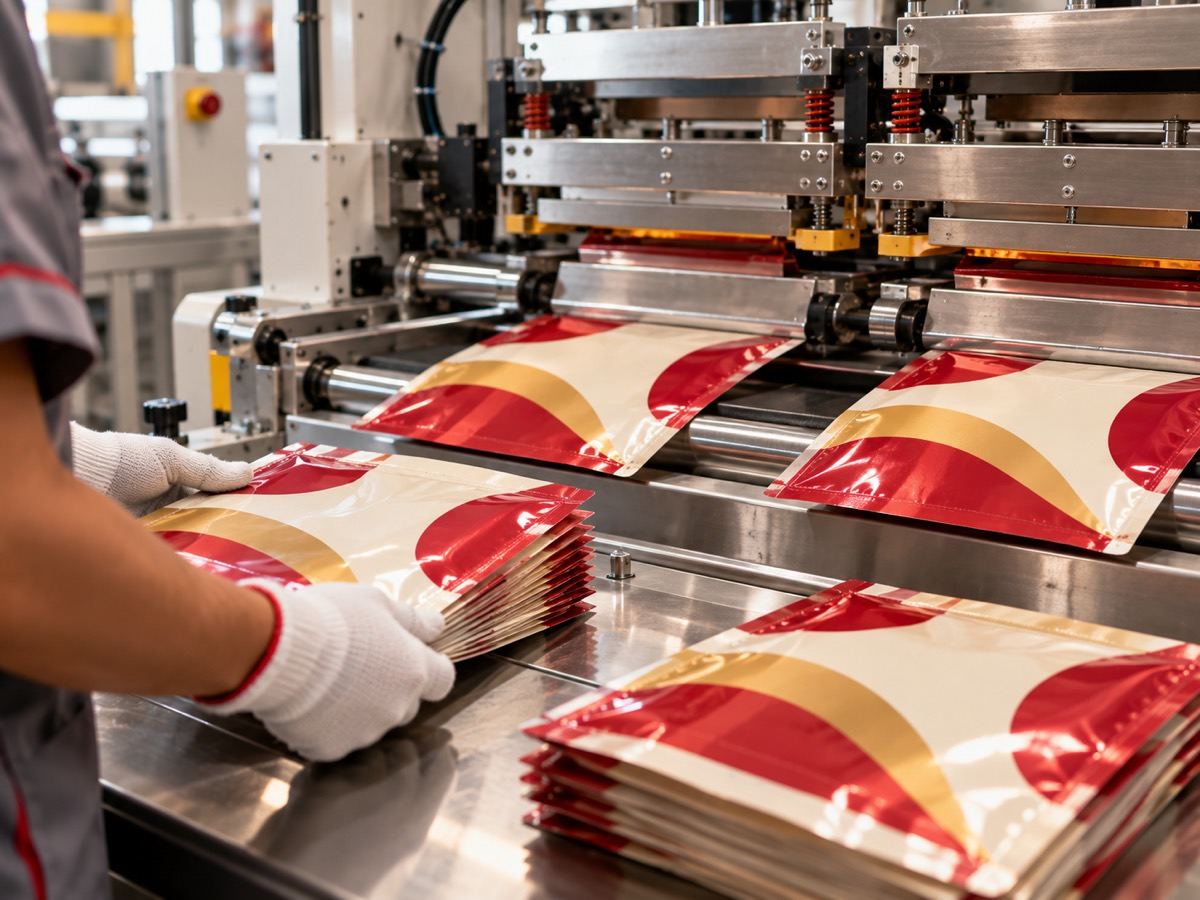
The film is folded and heat sealed into a finished bag, and the extras are added: a zipper, a spout and cap, a hang hole, a tear notch, or a one-way valve for coffee.
Three pouching lines cover three-side and centre seal, side seal, and bottom seal formats, so most jobs have a machine suited to them.
Machinery

Turns flat film into three-side seal and centre seal pouches, with attachments for zippers, gussets and punches.

Makes side seal pouches, including very small ones. The fastest of the pouching machines.

Makes bags sealed along the bottom from the softer films: LDPE, HDPE and polypropylene.

Welds the plastic spout and cap onto a liquid pouch. A semi-automatic machine alongside fits soft loop handles.
Film is tested when it arrives, while it runs and before it leaves. The in-house lab checks each job against the product it will carry, and a certificate of analysis can travel with the consignment.
